
The Remote Control Was A Privilege We Had To Earn
We Walked Uphill To Change The Channel

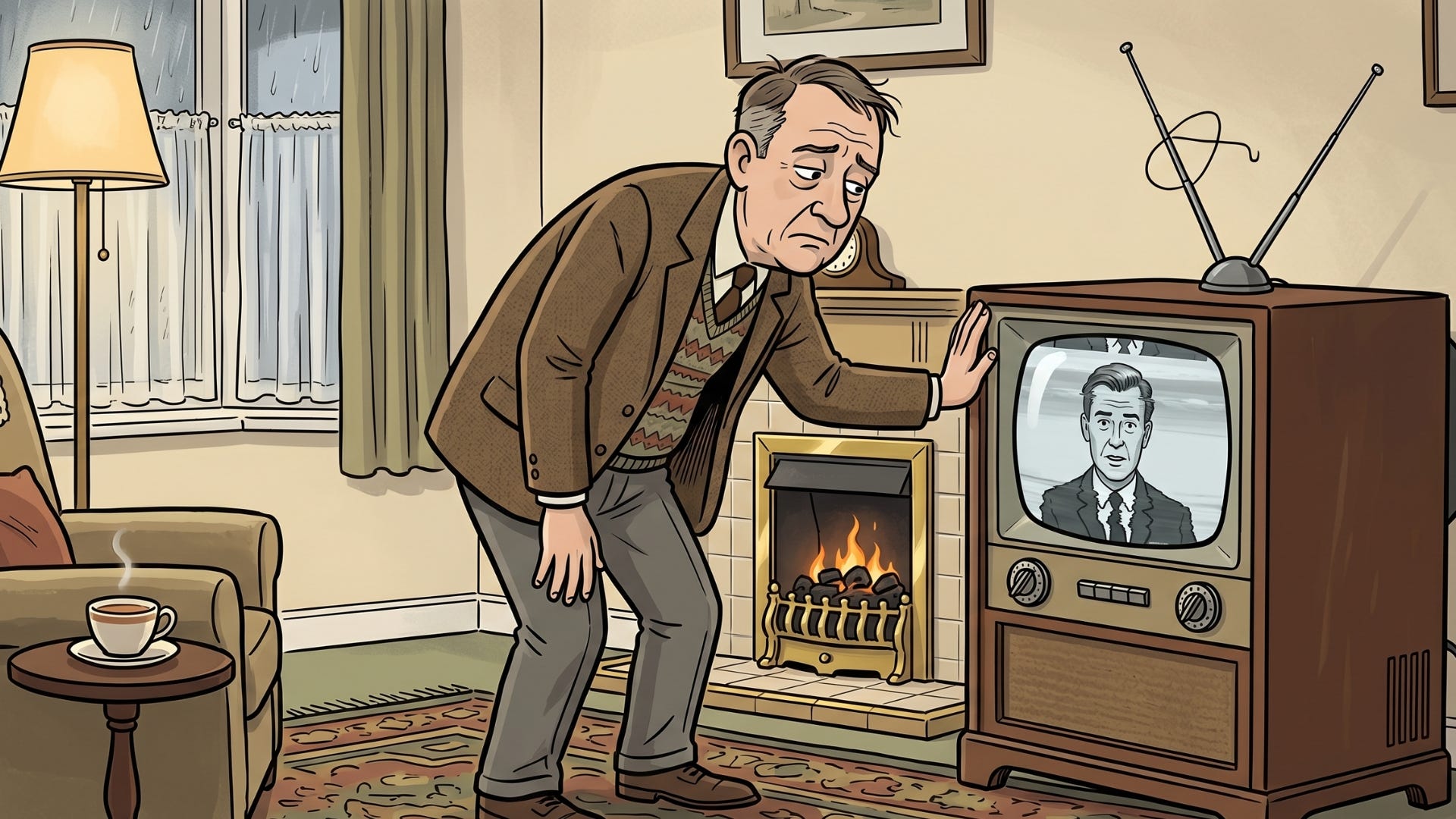
When I was young, changing the TV channel required getting up.
Not asking someone. Not pressing a button. Getting up. Physically. Walking across the room. Turning a dial.
Every time.
This is apparently hilarious to people born after 1980.
We had two channels.
BBC and ITV.
That was the entire landscape of British television. Two channels, a dial, and the quiet understanding that if you didn’t like what was on, your other option was also probably just as bad.
BBC2 arrived in 1964, which in theory gave us three. In practice it showed a man explaining farming, so really we still had two.
The television itself was positioned, as all televisions were, at the precise viewing distance from the sofa. Past the coffee table.
Beyond the draught coming under the front door.
In a microclimate that was somehow three degrees colder than the rest of the room.
You had to want it.
Bonanza was on ITV. Coronation Street had just started. If you were quick you could catch the end of Emergency Ward 10.
But wanting it meant getting up. Walking over. Turning the dial. Walking back. Sitting down.
Then the vertical hold would go.
The picture would start to roll. Slowly at first. Then faster. The whole image sliding upward like the television was trying to escape.
Your dad would sigh the sigh of a man who had accepted this as simply what life was, walk over, and hit the side of the set with his palm.
This worked. Nobody knew why and nobody bothered to ask.
He’d walk back. Sit down. Watch three minutes of Coronation Street. Then it would start rolling again.
Eleven times in one evening. Minimum.
My grandchildren change channels by talking at the television.
They don’t look up. They don’t move. They issue a command and the television obeys.
I explained once about the dial. About the vertical hold. About crossing a cold room in your socks on a Wednesday night in January just to watch the second half of a cowboy show called Bonanza.
One of them said: “Why didn’t you just watch something else?”
There was nothing else.
There were two channels and both of them were sometimes a still image of a rotating wheel that the BBC broadcast to fill time and called a Trade Test Transmission.
Sometimes we watched that. Something to look at, I suppose.
I would like to think it built character. There had to be some benefit.
Getting up off that sofa, crossing that room, adjusting that dial, took discipline. Right there that was commitment.
That was a man deciding what he wanted and going to get it, regardless of the temperature, regardless of the draught, regardless of how many times the vertical hold would undo all his work the moment he sat back down.
We didn’t have convenience.
We had Bonanza and a faulty picture and the quiet dignity of a generation that never once complained about it.
Until now, obviously.
😂 and not to forget adjusting those antennas to find a perfect position based on current weather, location of nearest windows, and other disturbances of the moment ...
And don't forget the time it took between pushing the power button and the emergence of the image. You had to time it. Five to ten minutes to get the thing to reach the right temprature.