
We Kept The “Best” Room For People Who Never Came
And We Didn't Qualify

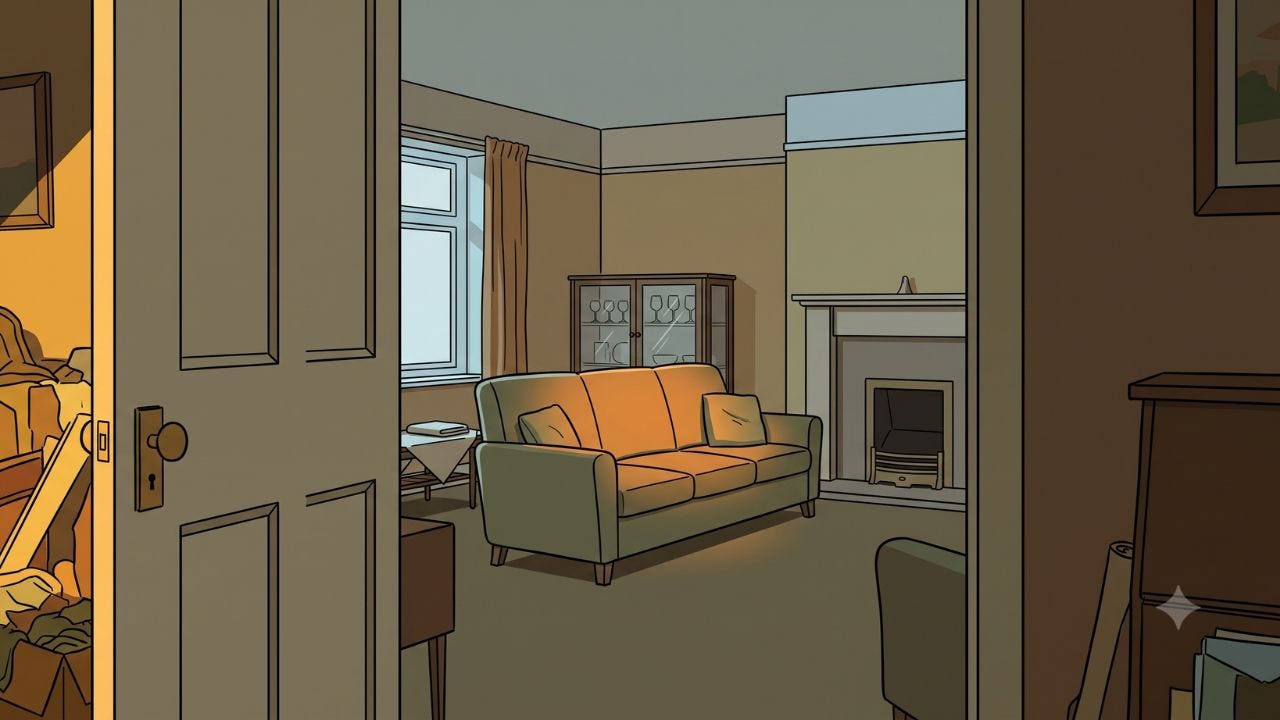
When I was a kid we had a room in our house that we weren’t allowed to be in.
It was called the front room. Not the living room. We lived in the other one, the back one, the one with the good telly and the settee that had been sat on so many times it was shaped like us.
The front room was for “best”.
I never fully understood what “best” was. It was never defined or explained. It just was. But I’d lived under its rule long enough to recognise it when I saw it, the way you recognise weather.
The front room had the “best” sofa. I don’t recall anyone ever sitting on the best sofa. It was a sofa the way a museum exhibit is a chair. You could look at it and admire the craftsmanship. You could not, under any circumstances, plonk your actual body on it.
The Guest
The room was for visitors.
Not us. We lived there, which apparently disqualified us.
It was kept in a permanent state of readiness for a superior class of guest who would arrive one day, notice how nice everything was, and think well of us. These guests were never described to me. I never knew their names. They never came.
When people did come, actual people, aunts and uncles and cousins, they sat in the back room with us, because that’s where life was happening. The front room watched them not use it through a door left slightly open.
The Good Towels
It wasn’t just the room.
There was a set of towels in the airing cupboard we weren’t allowed to dry ourselves with. They were the best towels. Thick, matching, folded with a precision I doubt I could reproduce if my life depended on it. They were for the same guest who never sat on the sofa.
We dried ourselves on the other towels. The thin ones. The ones that had given their best years to the family and now have roughly the absorbency of a crisp packet.
There were plates we’d used twice. Wine glasses in a cabinet we drank out of on precisely no occasions, because no occasion was ever quite best enough to risk them. A tablecloth that appeared at Christmas and spent the other three hundred and sixty-four days being too nice for any given Tuesday.
The logic, as far as I can follow it, ran like this.
The best things were saved for when they were needed. But needing them required an occasion. And no ordinary day qualified as an occasion. And every day, without exception, turned out to be ordinary.
So the best things waited. Ready. Unused. For best.
I said to my mum once that maybe we could just use the front room. Sit in it. On a normal evening. For no reason.
She looked at me the way you’d look at someone proposing you eat the Christmas decorations.
“It’s for best,” she said.
I asked her when best was.
She didn’t answer, because best isn’t a date. Best is a direction. It stays slightly ahead of you, keeping its distance, staying nice.
Our grandparents did exactly the same. A front room nobody used, plates nobody ate off, all of it kept immaculate for a version of company that was always about to arrive and somehow never quite did. We inherited the room and the rule and the guest who doesn’t exist.
One day someone will inherit ours.
They’ll open the front room and find a perfect sofa nobody sat on and good towels nobody dried with, all of it saved, all of it ready, all of it for best.
And I suspect the ordinary days, the ones in the back room with the shaped settee and the thin towels, will turn out to have been the “best” all along.
When I received monogrammed towels at a bridal shower, my fiancé asked if those were the ones that when you display them, a person ends up drying his hand on his pants because he’s not sure if he’s supposed to use them.
Our houses were never large enough to have a parlor. I remember visiting friends and relatives with older Victorian houses or fancier new houses. They lived in the dining room or family room and only used the living room for dull bridge parties to impress the boss.